
Thickness Options
Choose Your Profile
Understanding Thickness Options
This page answers the question: What thickness should I choose for my countertops?
For kitchen countertops, 3cm (1¼") is the industry standard—it provides structural integrity without substrate support and allows for all edge profile options. For bathrooms and vertical applications, 2cm works well and saves cost.
Countertop thickness affects both aesthetics and functionality. From slim 12mm porcelain to substantial 3cm quartz, the right thickness creates your desired visual impact.
How It Works on Each Material
The application and characteristics of thickness options can vary depending on the surface material.
Quartz
Quartz is most commonly available in 2cm and 3cm thicknesses. 3cm is standard for kitchen countertops as it provides sufficient structural integrity without substrate support.
- 3cm for all kitchen countertop applications
- 2cm for bathroom vanities and backsplashes
- Mitered construction for extra-thick appearance
Porcelain
Porcelain offers the widest range of thicknesses, from ultra-slim 6mm to robust 20mm. This versatility enables unique applications not possible with other materials.
- 6-12mm for wall cladding and backsplashes
- 12mm for residential countertops with mitered edges
- 20mm for high-traffic commercial applications
Where This Works Best
Different thickness options options are suited to different environments. Here's where each shines.
Thickness Options Options Compared
Each option has its own characteristics. Compare them to find the right fit for your project.
Ultra-Slim (6-12mm)
Cutting-edge thin porcelain slabs for wall cladding, waterfall applications, and modern minimalist designs.
- Ultra-modern aesthetic
- Lightweight for wall applications
- Seamless waterfall edges
- Unique visual statement
- Requires substrate support
- Limited to porcelain
- Specialized installation
Wall cladding, waterfall edges, and contemporary commercial spaces
2cm (¾")
Standard thickness ideal for bathrooms, vertical applications, and when paired with a laminated edge for kitchen use.
- Lower material cost
- Lighter weight
- Ideal for vertical surfaces
- Works with laminated edges
- Requires plywood support in kitchens
- Less substantial feel
- Limited standalone edge profiles
Bathroom vanities, backsplashes, and budget-conscious projects
3cm (1¼")
The standard for kitchen countertops. Substantial presence that doesn't require additional support.
- No support plywood needed
- All edge profiles available
- Substantial visual presence
- Industry standard
- Higher material cost
- Heavier—may affect cabinet requirements
Kitchen countertops, islands, and all standard applications
Extra Thick (4cm+)
Dramatic, furniture-weight countertops that make a bold design statement. Often achieved through mitering.
- Dramatic visual impact
- Furniture-like presence
- Unique design statement
- Maximum durability
- Significantly higher cost
- Much heavier
- May require reinforced cabinets
Statement kitchen islands and high-end custom installations
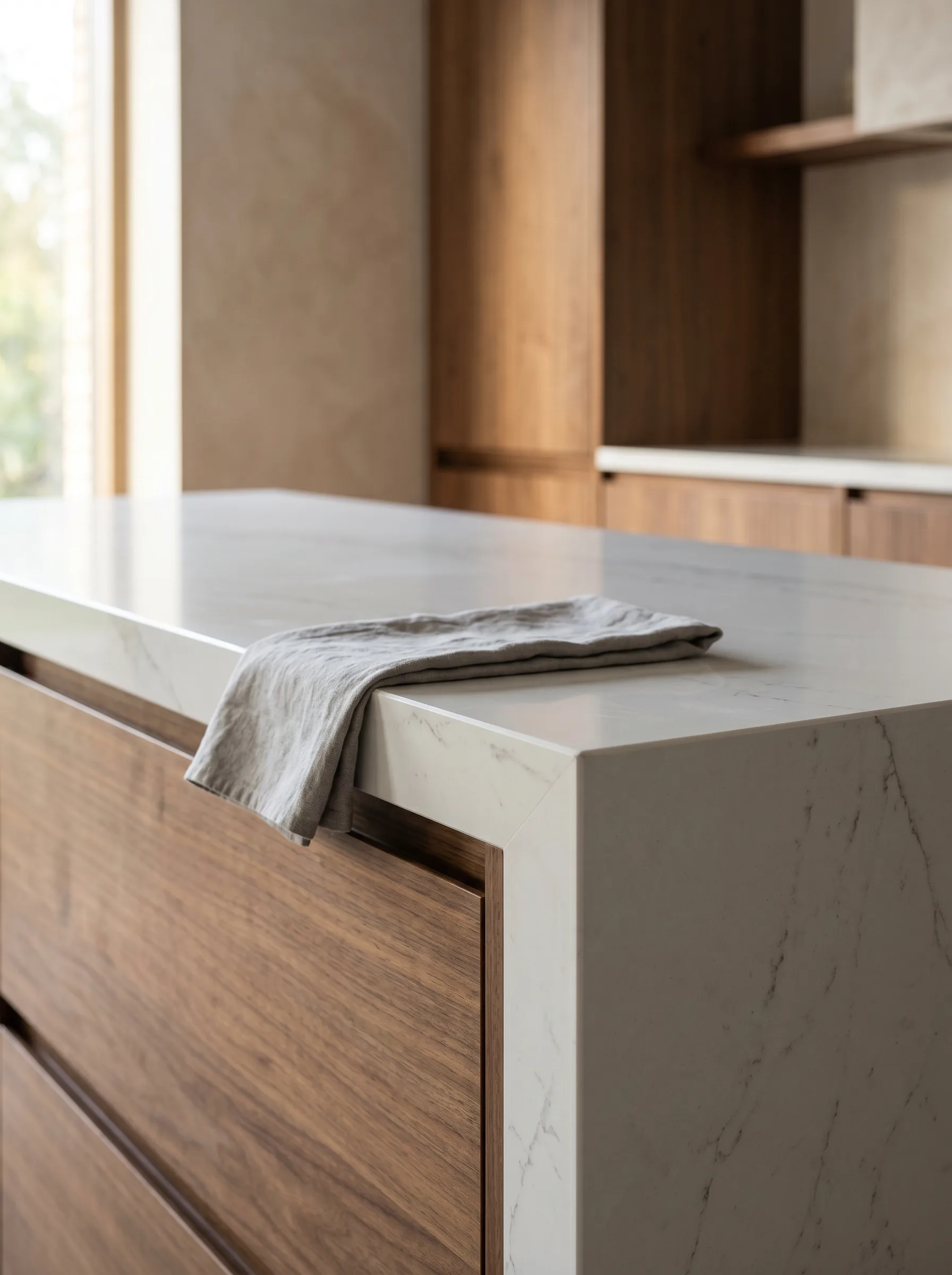
Thickness Options in Real Projects
See how different options look in completed installations.
Frequently Asked Questions
We've gathered answers to the most common questions about thickness options — so you feel confident and informed every step of the way.
Still have questions? We're here to help.
Contact UsNeed Help Choosing?
Our experts can help you select the perfect thickness options for your project.