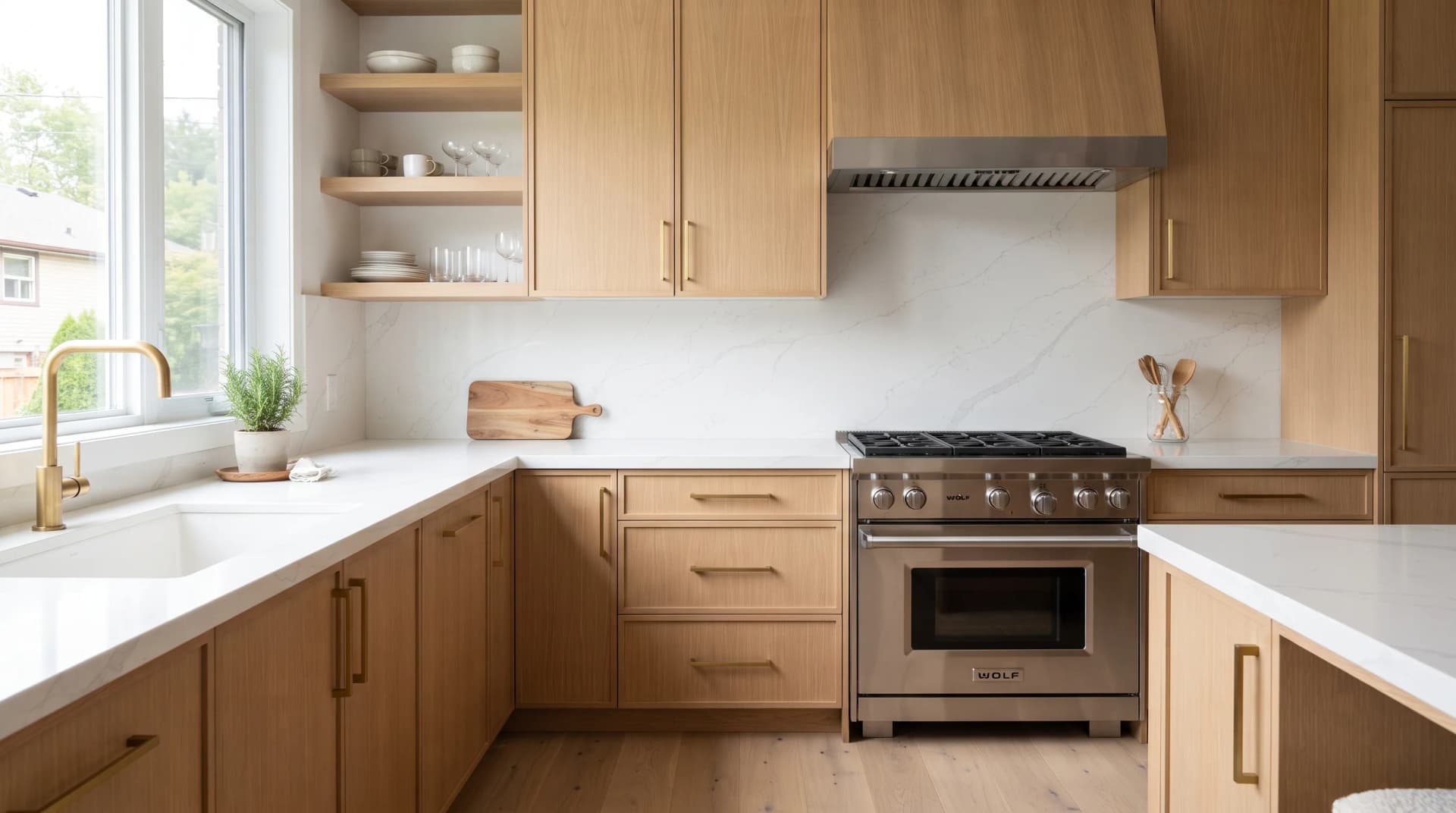
Of the 847 porcelain countertop consultations we conducted last year, 73% of homeowners initially assumed porcelain only came in one thickness. The question "which thickness?" wasn't on their radar—until we showed them the options.
That 73% split fairly evenly: about a third ended up choosing a different thickness than they would have defaulted to, and many cite thickness selection as the detail that made their design work. The difference between 6mm, 12mm, and 20mm isn't just about cost—it fundamentally affects how your countertop looks, performs, and integrates with your kitchen design.
Porcelain countertops come in three standard thicknesses: 6mm (ultra-thin, best for wall cladding and overlays), 12mm (sleek modern aesthetic, popular for contemporary kitchens), and 20mm (standard thickness, most versatile for all applications). Choose 20mm for maximum durability and edge profile options; choose 12mm for a minimalist aesthetic; choose 6mm primarily for vertical surfaces or overlay applications.
- 20mm is the default for kitchen countertops—handles all edge profiles and overhangs
- 12mm creates a sleek, modern profile but requires careful planning for overhangs
- 6mm needs substrate support for horizontal applications
- Thickness affects cost per square foot by 15-30%
- Edge lamination can make thin porcelain appear thicker
Why Porcelain Thickness Matters
Thickness isn't just a number—it affects virtually every aspect of your countertop project:
Structural Considerations
Thicker slabs handle more stress. A 20mm porcelain countertop can span unsupported distances that would require reinforcement with thinner options. This matters for:
- Overhangs: Bar seating areas and island extensions
- Undermount sinks: Cutout stability around sink openings
- Support spacing: How close cabinet supports need to be
Visual Impact
Thickness dramatically changes the aesthetic:
- Thin profiles (6mm, 12mm): Create a sleek, contemporary, almost "floating" appearance
- Standard profiles (20mm): Look substantial and traditional, similar to natural stone
- Laminated edges: Can make any thickness appear more substantial

Understanding Porcelain Thickness Standards
Unlike quartz (which typically comes in 20mm or 30mm), porcelain manufacturers offer multiple thickness options to suit different applications. The major manufacturers each produce slabs in multiple gauges.
| Thickness | Metric | Imperial | Weight (approx.) |
|---|---|---|---|
| 6mm | 6mm | 1/4 inch | ~14.5 kg/m² (3 lbs/sq ft) |
| 12mm | 12mm | 1/2 inch | ~29 kg/m² (6 lbs/sq ft) |
| 20mm | 20mm | 3/4 inch | ~48 kg/m² (10 lbs/sq ft) |
Some manufacturers also offer 3mm (for interior cladding only), 8mm, and 30mm options, though these are less common in Canada.
6mm Porcelain: Ultra-Thin Applications
6mm porcelain is the thinnest option available for countertop-related applications. It opens design possibilities but requires understanding its limitations.
Where 6mm Excels
Wall Cladding and Backsplashes: Large-format 6mm porcelain creates seamless backsplash surfaces—extending your countertop pattern up the wall without the weight concerns of thicker options.
Cabinet Door Facing: Some designers use 6mm porcelain to face cabinet doors, creating a unified surface aesthetic throughout the kitchen.
Feature Walls: Living room accent walls, fireplace surrounds, and bathroom wet walls benefit from 6mm porcelain's lighter weight.
6mm Limitations for Countertops
Requires Substrate Support: 6mm porcelain cannot span unsupported distances like standard countertop slabs. It needs a solid substrate (plywood, MDF, or existing countertop) beneath it when used horizontally.
Limited Edge Profiles: Most decorative edge profiles are impossible at 6mm. Options are typically limited to square/pencil edge, slight eased edge, or laminated edge (adding material to create appearance of thickness).
“We used 6mm porcelain to clad the entire back wall of a kitchen—floor to ceiling, 4 metres high. At 20mm, the weight would have required structural engineering review. At 6mm, standard wall studs handled it comfortably.”
12mm Porcelain: The Modern Choice
12mm has become increasingly popular in contemporary kitchen design. It offers a compelling middle ground between ultra-thin and standard options.
The 12mm Aesthetic
The defining characteristic of 12mm porcelain is its visual profile—noticeably thinner than traditional countertops, creating a sleek, modern appearance that works particularly well in:
- Contemporary kitchens: Clean lines and minimal visual weight
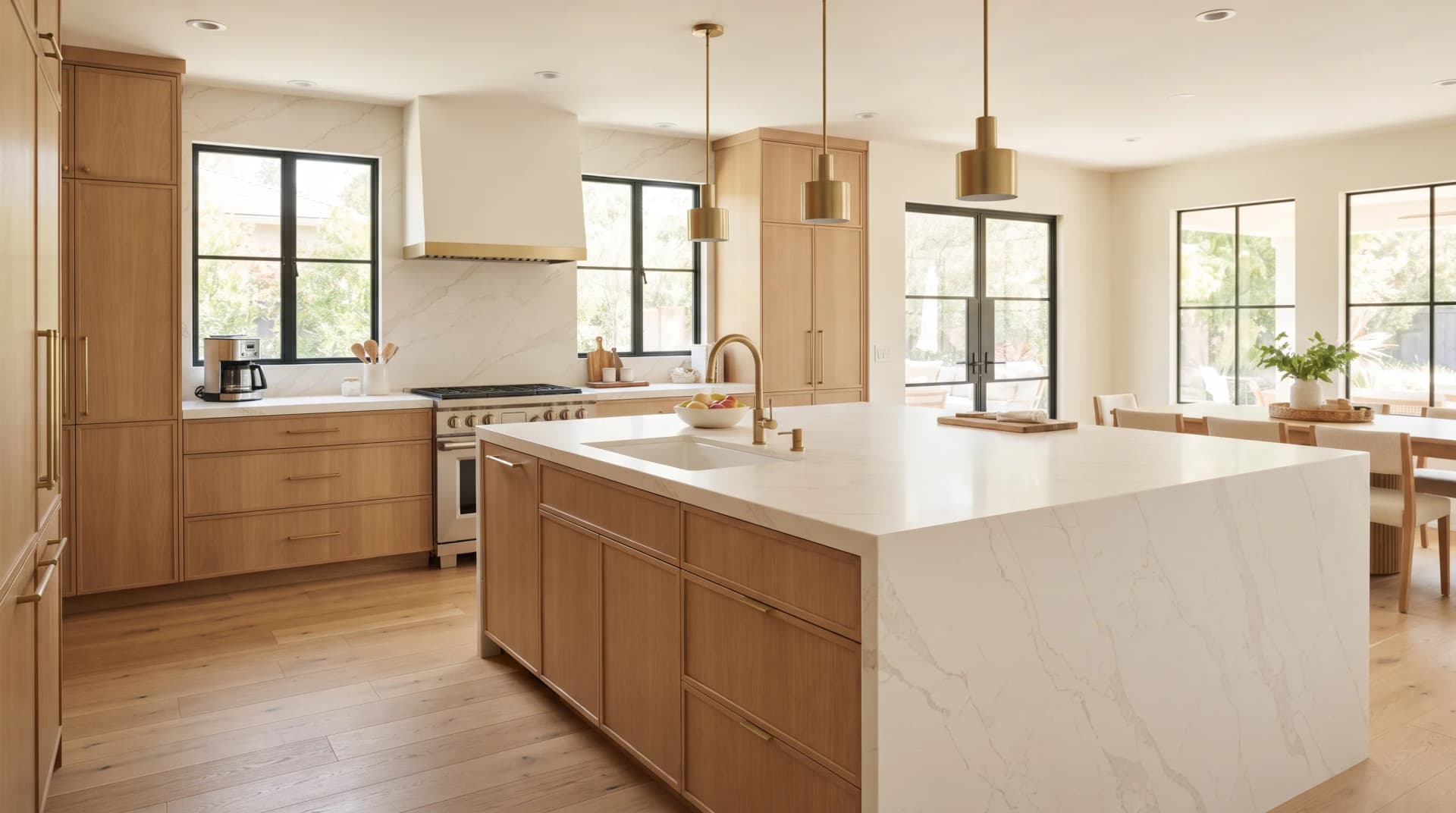
- Waterfall designs: Thin edges create dramatic floor-to-ceiling statements
- Floating island aesthetics: The countertop appears to hover over the cabinet base
- Scandinavian and minimalist designs: Where bulk feels out of place

Structural Capabilities
12mm porcelain can function as a self-supporting countertop surface, but with conditions:
- Standard support spacing: 500-600mm between supports
- Maximum recommended overhang: 200-250mm without brackets
- Sink cutouts: May require perimeter support reinforcement
Compare to 20mm, which typically supports 700-800mm spans and 300-350mm overhangs without additional measures.
Considering 12mm for your project?
Request a free quote and we can discuss the right porcelain thickness for your project. Our team will help you understand the differences between 12mm and 20mm.
Request Free Quote20mm Porcelain: Standard Kitchen Thickness
20mm is the default choice for kitchen countertops—and for good reason. It offers the most versatility, structural integrity, and fabrication options.
Why 20mm Is the Standard
Structural Reliability: At 20mm, porcelain countertops handle virtually any kitchen scenario:
- Extended overhangs for bar seating (up to 350mm without brackets)
- Large undermount sinks
- Cooktop cutouts
- Standard cabinet spacing
Full Edge Profile Options: Every edge profile that works on quartz or granite works on 20mm porcelain: eased/pencil, beveled, bullnose (half and full), ogee, mitered for waterfall, and laminated for extra thickness appearance.
Installation Familiarity: Most fabricators and installers handle 20mm porcelain the same way they handle quartz—no special substrate requirements, no unusual handling concerns.

Thickness Comparison Table
| Factor | 6mm | 12mm | 20mm |
|---|---|---|---|
| Weight (per sq ft) | ~3 lbs | ~6 lbs | ~10 lbs |
| Self-Supporting? | No | Limited | Yes |
| Recommended Overhang | N/A (substrate) | 200-250mm | 300-350mm |
| Support Spacing | Continuous | 500-600mm | 700-800mm |
| Edge Profile Options | Very limited | Moderate | Full range |
| Primary Applications | Walls, overlays | Modern kitchens, waterfall | All countertops |
| Relative Cost | Lowest | Middle | Highest |
| Fabrication Complexity | Highest | Moderate | Standard |
Edge Profiles by Thickness
Edge profile availability varies significantly by thickness. Here's what's typically possible:
6mm Edge Options
| Profile | Availability | Notes |
|---|---|---|
| Square/Pencil | Yes | Only self-finished option |
| Eased | Yes | Minor rounding only |
| Laminated | Yes | Adds strips to create thickness |
| Bullnose | No | Insufficient material depth |
| Ogee | No | Insufficient material depth |
12mm Edge Options
| Profile | Availability | Notes |
|---|---|---|
| Square/Pencil | Yes | Clean modern look |
| Eased | Yes | Standard option |
| Small Beveled | Yes | 3-5mm bevel |
| Half-Bullnose | Limited | Small radius only |
| Mitered | Yes | Excellent for waterfall |
| Laminated | Yes | Popular for added visual weight |
20mm Edge Options
| Profile | Availability | Notes |
|---|---|---|
| All Standard Profiles | Yes | Full compatibility |
| Complex Profiles | Yes | Ogee, dupont, etc. |
| Mitered | Yes | Standard waterfall option |
| Laminated | Yes | Creates 40mm appearance |
| Custom | Possible | Fabricator-dependent |

Laminated Edges: Creating Thicker Appearances
Lamination solves the "I want thin profile aesthetics but substantial edge appearance" challenge. It involves bonding additional porcelain strips to the underside of the main slab.
How Lamination Works
A strip of matching porcelain is adhered to the slab edge, effectively doubling (or more) the apparent thickness:
- 6mm + 6mm lamination = 12mm appearance
- 12mm + 12mm lamination = 24mm appearance
- 20mm + 20mm lamination = 40mm appearance
“We specified 12mm with laminated edges on a recent project—the client got the thin waterfall profile they wanted plus the chunky eating bar edge for seating. Best of both worlds without paying for solid 20mm throughout.”
Cost Differences by Thickness
Material thickness directly affects cost, but not as dramatically as you might expect.
Material Cost Comparison (CAD per sq ft, material only)
| Thickness | Budget Tier | Mid-Range | Premium |
|---|---|---|---|
| 6mm | $45-$55 | $55-$70 | $70-$90 |
| 12mm | $55-$70 | $70-$90 | $90-$120 |
| 20mm | $65-$85 | $85-$110 | $110-$150 |
The cost increase from 12mm to 20mm is typically 15-25% for material only. For installed projects, the difference narrows because fabrication and installation costs are similar. On a $5,000 project, upgrading from 12mm to 20mm might add $400-600.
Want to see pricing for your specific project?
Our estimate calculator factors in thickness, edge treatments, and your location for accurate pricing.
Get My EstimateHow to Choose the Right Thickness
Use this decision framework to select the appropriate porcelain thickness for your project:
Step 1: Identify Your Application
| Application | Recommended Thickness |
|---|---|
| Kitchen countertops (standard) | 20mm |
| Kitchen island (contemporary design) | 12mm or 20mm |
| Waterfall edges | 12mm (preferred) or 20mm |
| Bathroom vanity | 12mm or 20mm |
| Backsplash/wall cladding | 6mm |
| Outdoor kitchen | 12mm or 20mm |
| Commercial surfaces | 20mm |
Step 2: Consider Your Aesthetic
If you prefer:
- Sleek, modern, thin profiles → 12mm
- Substantial, traditional proportions → 20mm
- Minimalist with some visual weight → 12mm with laminated edges
- Classic countertop appearance → 20mm
The Safe Default
When uncertain, choose 20mm. It handles every scenario, every edge profile, every installation challenge. You sacrifice nothing except a few dollars per square foot—and you gain maximum flexibility and peace of mind.

Frequently Asked Questions
See porcelain options from our collection in various thicknesses


Your Next Steps
Now that you understand porcelain thickness options, here's how to move forward:
See thickness options in person:
Request a free quote and our team can discuss porcelain thickness options with you. Understanding the difference between 12mm and 20mm is key to choosing the right surface for your project.
Learn more about porcelain:
- What Are Porcelain Countertops? — Complete overview of the material
- How Porcelain Slabs Are Made — The sintering process explained
- Heat Resistance Showdown: Quartz vs Porcelain — Performance comparison
Get personalized guidance:
Book a call to discuss your specific project. We'll recommend the right thickness based on your layout, aesthetic preferences, and budget.
Your Next Steps

We fabricate and install what this article describes — see what we do in Brampton and our Burlington showroom and service area.